

There is a conversation happening in conference rooms every day that sounds remarkably familiar. Sales says the leads aren’t qualified. Marketing says sales isn’t following up.
Leadership looks at the dashboard and sees activity everywhere, yet revenue remains unpredictable.
The instinct is often to determine which department is responsible. Is marketing generating the wrong leads? Is sales failing to close opportunities? Should more budget be allocated to demand generation, or is the sales process in need of improvement?
In reality, these questions often miss the underlying issue.
The problem isn’t sales. The problem isn’t marketing.
The problem is alignment.
Organizations that consistently outperform their competitors rarely do so because one department is exceptional. They succeed because sales and marketing operate from a shared understanding of the customer, the market, and the organization’s growth objectives. Sales and marketing alignment isn’t simply an operational best practice—it is one of the strongest predictors of sustainable, measurable growth.
Why Sales and Marketing Alignment Is About More Than Collaboration
When executives hear the phrase sales and marketing alignment, they often picture better communication. Weekly pipeline meetings. Shared Slack channels. Quarterly planning sessions.
Those activities are valuable, but they are not alignment.
True alignment occurs when both teams are working toward the same strategic outcomes using the same definition of success.
Marketing should understand what makes a lead valuable beyond a form submission. Sales should understand the messaging, positioning, and buyer intent behind every campaign. Leadership should be able to trace every marketing initiative to business objectives and every sales outcome back to the strategy that generated demand.
Without that shared foundation, collaboration becomes reactive instead of intentional.
Alignment is not about talking more.
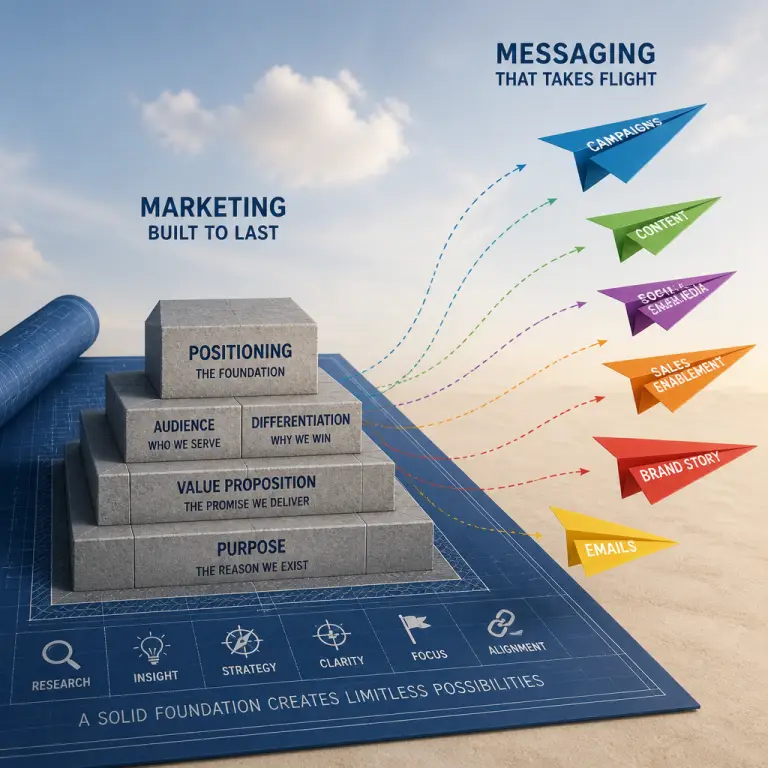
It is about building from the same blueprint.
Why Sales and Marketing Naturally Drift Apart
Most organizations don’t intentionally create division between sales and marketing. It develops gradually as each team optimizes for its own responsibilities.
Marketing is often measured by website traffic, campaign performance, lead generation, and engagement. Sales is measured by pipeline, close rates, and revenue.
Both teams are doing exactly what they have been asked to do.
The challenge is that these metrics don’t always encourage shared accountability.
Marketing celebrates a successful webinar because it generated hundreds of registrations. Sales may view that same webinar as unsuccessful if few attendees become qualified opportunities.
Neither perspective is wrong.
They’re simply measuring different outcomes.
Over time, these differences create separate priorities, different definitions of qualified leads, and inconsistent views of the customer journey. What begins as a small disconnect eventually becomes a strategic gap.
This is why sales and marketing alignment must begin with leadership. Alignment is not created through better communication alone—it is established by shared objectives, common definitions, and a unified growth strategy.
The Hidden Cost of Misalignment
The consequences of misalignment are often underestimated because they accumulate gradually.
Marketing invests in campaigns that generate interest but not buying intent. Sales spends valuable time pursuing prospects who were never an ideal fit. Customer messaging changes as buyers move from marketing content to sales conversations, creating confusion and eroding trust.
Eventually, leadership begins questioning marketing return on investment, forecasting becomes less reliable, and customer acquisition costs increase.
Perhaps the greatest hidden cost is lost opportunity.
When sales and marketing alignment is missing, organizations frequently mistake strategic issues for tactical ones. They redesign websites, launch new campaigns, purchase additional technology, or increase advertising budgets, believing that more activity will solve the problem.
But no amount of activity can compensate for a lack of alignment.
Growth becomes harder, not because the market has changed, but because the organization is pulling in different directions.
What Sales and Marketing Alignment Actually Looks Like
Healthy alignment is evident long before revenue appears on a dashboard.
It begins with a shared Ideal Customer Profile (ICP). Both marketing and sales understand not only who the organization serves, but also which customers generate the greatest long-term value. Campaigns attract those customers intentionally, and sales conversations reinforce the same expectations established through marketing.
Messaging is equally consistent. The promises made on your website are the same promises reinforced during discovery calls, product demonstrations, and proposals. Buyers experience one cohesive story rather than multiple versions depending on who they speak with.
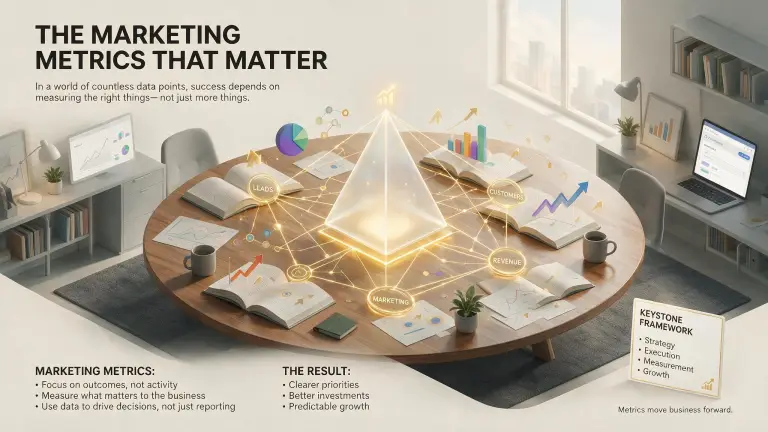
Measurement also changes. Instead of celebrating isolated metrics, leadership evaluates how marketing influences pipeline, how sales converts opportunity into revenue, and how both teams contribute to customer success.
When sales and marketing alignment exists, every stage of the customer journey feels connected.
Why Alignment Improves SEO, AEO, and Revenue
Alignment does more than improve internal operations—it strengthens your digital presence.
Consider where your most valuable customer insights originate. Sales teams hear objections every day. They understand the questions prospects ask before making a purchase. Marketing teams can transform those conversations into blog articles, resource guides, videos, FAQs, and website copy that directly address customer concerns.
This process strengthens both SEO and Answer Engine Optimization (AEO).
Search engines reward organizations that consistently demonstrate topical authority. AI-powered search experiences increasingly prioritize content that provides direct, trustworthy, and comprehensive answers to real customer questions.
When sales and marketing work together, content becomes more relevant because it reflects actual buyer conversations instead of assumptions. That consistency reinforces authority across your website, improves visibility in search, and increases the likelihood of appearing in AI-generated summaries.
In other words, sales and marketing alignment doesn’t just improve internal efficiency—it helps your business become easier to find and easier to trust.
Building Alignment Into Your Growth Strategy
Many organizations attempt to solve alignment through process improvements alone. They introduce additional meetings. New reporting dashboards. Revised lead scoring models. While these initiatives can be valuable, they often fail because they address symptoms instead of structure.
Sustainable alignment requires a framework that connects positioning, audience definition, messaging, content strategy, lead qualification, reporting, and revenue objectives into one cohesive system.
That philosophy is the foundation of the Keystone Marketing Framework for Predictable Growth, which emphasizes strategic clarity before tactical execution. Rather than asking marketing and sales to work harder, the framework helps them work from the same foundation, creating consistency from the first customer interaction through long-term retention.
When everyone operates from the same strategic blueprint, growth becomes significantly more predictable.
Five Questions Every Leadership Team Should Be Asking
One of the simplest ways to evaluate alignment is to ask difficult questions.
- Would your marketing team and sales team describe your ideal customer in exactly the same way?
- Does your website communicate the same value proposition your sales team presents during discovery calls?
- Are marketing campaigns measured by revenue contribution or simply by lead volume?
- Can both departments clearly define what qualifies someone as sales-ready?
- Would a prospective customer experience one consistent narrative from their first website visit to signing a contract?
If those answers vary depending on who you ask, the issue is unlikely to be communication.
It is likely alignment.
Predictable Growth Begins With Shared Direction
Businesses often search for growth by adding more.
- More campaigns.
- More software.
- More advertising.
- More content.
Sometimes growth doesn’t require more activity.
It requires greater alignment.
When marketing understands what sales truly needs, campaigns become more intentional. When sales understands the strategy behind marketing, conversations become more effective. When leadership measures success through shared business outcomes, both teams begin moving in the same direction.
That is where predictable growth begins.
Not with better marketing.
Not with better sales.
But with sales and marketing alignment that transforms individual effort into organizational momentum.
Frequently Asked Questions
What is sales and marketing alignment?
Sales and marketing alignment is the process of ensuring both teams share common goals, messaging, customer definitions, performance metrics, and revenue objectives to create a consistent customer experience and predictable growth.
Why is sales and marketing alignment important?
Alignment improves lead quality, increases conversion rates, strengthens customer trust, and enables more accurate forecasting by ensuring both teams work toward the same business outcomes.
What causes sales and marketing misalignment?
Common causes include different KPIs, inconsistent definitions of qualified leads, disconnected technology, fragmented messaging, and a lack of shared strategic planning.
How do you improve sales and marketing alignment?
Start by creating a shared Ideal Customer Profile, aligning messaging, agreeing on lead qualification criteria, measuring shared revenue metrics, and maintaining regular strategic communication between departments.
How does sales and marketing alignment improve SEO and AI visibility?
Sales teams uncover the questions customers actually ask. Marketing can turn those insights into authoritative content that improves search rankings, supports AI-generated answers, and strengthens topical authority.
Key Takeaways
- Sales and marketing alignment is a strategic growth initiative, not simply an operational exercise.
- Shared goals, messaging, and customer definitions improve both conversion rates and forecasting.
- Alignment reduces wasted marketing spend while increasing sales efficiency.
- Organizations that align customer insights with content strategy strengthen both SEO and AEO performance.
- Predictable growth begins with a shared strategic framework—not isolated departmental success.