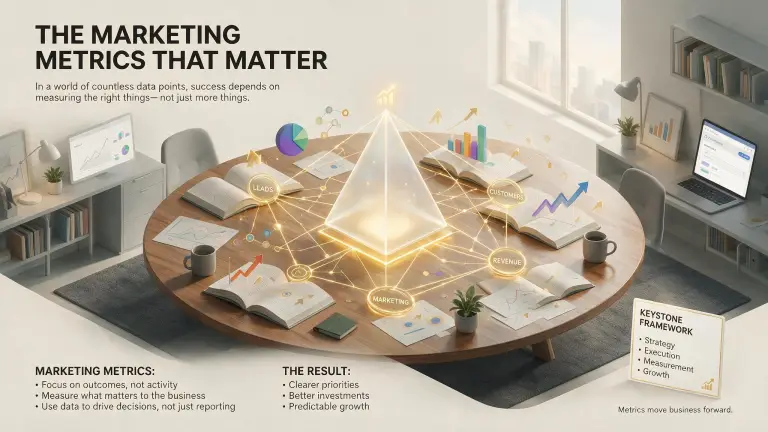


The first week of March has passed. That may not seem significant at first glance, but it often marks an important moment for business leaders. The excitement of the new year has settled, and the early momentum of annual plans begins to reveal real signals. Some companies are already seeing traction, while others quietly wonder why results feel slower than expected.
When that feeling appears, it is easy to assume the issue lies in execution. Maybe marketing campaigns need to run longer. Maybe the team needs to post more often or launch another promotion. However, marketing success rarely depends on tactics alone. In many cases, the real issue sits deeper within the business structure itself.
This is the moment when thoughtful leaders pause and evaluate their marketing foundation. Because if something feels slightly misaligned now, waiting several more months rarely improves the situation. Marketing strategy does not fail overnight. Instead, small structural cracks gradually expand until the results become impossible to ignore.
Leads appear inconsistently. Campaign performance fluctuates. Customers arrive but do not always stay long term. When these signals appear together, they often reveal a deeper structural issue rather than a simple marketing problem.
Marketing Strategy Depends on a Strong Marketing Foundation
Many businesses believe marketing success depends on discovering the right campaign. They search for the perfect social platform, the perfect ad strategy, or the perfect content formula. While tactics certainly matter, they only succeed when supported by a strong structure beneath them.
Marketing functions much like architecture. A building can feature beautiful design elements and impressive finishes. However, those features cannot compensate for a weak foundation. If the structure underneath lacks stability, every addition creates more pressure.
Marketing works the same way. Your marketing foundation determines whether strategy produces sustainable results or constant frustration. Without a clear foundation, even strong campaigns struggle to gain traction.
A strong marketing foundation includes several critical components. Businesses must clearly understand their ideal customer profile, their market positioning, and the problems they solve better than anyone else. Messaging must reflect those insights, and the customer journey must support long-term engagement.
When these pieces align, marketing becomes more predictable. Campaigns amplify clarity rather than compensate for confusion.
Early-Year Signals Reveal Structural Misalignment
March provides a fascinating perspective within the business calendar. January brings ambition and new goals. February focuses on execution and momentum. By March, organizations begin to see the first meaningful signals of how the year may unfold.
Some companies experience encouraging traction during this period. Others feel hesitation despite significant effort. Leads may appear slower than expected, or engagement may feel weaker than planned.
When this happens, many leaders immediately increase activity. They launch additional campaigns or push for more visibility across channels. More activity can sometimes help, but it does not always solve the real issue.
If the marketing foundation lacks alignment with the market, additional effort simply amplifies the wrong message. Instead of creating growth, it increases frustration for both marketing teams and leadership.
That is why the early months of the year present such an important opportunity. Leaders still have time to pause, evaluate, and refine direction before the pace of the year accelerates.
When Your Ideal Customer Profile No Longer Fits
One of the most common structural challenges involves the ideal customer profile. Most businesses define this profile early in their growth journey. It reflects the customers who initially adopted their product or service.
However, markets evolve. Customer priorities shift, and new industries emerge. Over time, the original ideal customer profile may no longer represent the most valuable opportunity.
This misalignment rarely appears suddenly. Instead, it surfaces through subtle changes in customer behavior. Sales conversations become longer and more complex. Prospects hesitate longer before making decisions. Customers purchase once but fail to return or expand their relationship.
These patterns often indicate the company is attracting accounts that lack long-term alignment. They may appreciate the product but do not view it as essential to their long-term success.
Sustainable businesses rely on sticky customers. Sticky customers return, expand their usage, and recommend the solution to others. When companies evaluate their marketing foundation, they often discover that refining the ideal customer profile unlocks stronger long-term growth.
Sometimes the change involves narrowing focus within an existing industry. In other situations, it reveals opportunities within entirely new segments.
Messaging Must Evolve With the Market
Once the ideal customer profile evolves, messaging must evolve as well. Many organizations continue using the same messaging that worked several years earlier. While consistency is valuable, messaging should always reflect the problems customers care about today.
When messaging fails to evolve, marketing begins to feel disconnected from real customer concerns. Prospects visit the website but struggle to see themselves in the story. Content may appear informative but does not inspire action.
This disconnect creates friction throughout the customer journey. Prospects hesitate to engage because the message does not clearly reflect their challenges.
Effective marketing creates recognition. Prospects should immediately feel understood when they encounter your message. That recognition builds trust and encourages deeper engagement.
Strong messaging depends on a well-defined marketing foundation. Without structural clarity, messaging often becomes generic or overly broad.
Growth Requires Structural Alignment
Marketing often appears to be a creative discipline. Visual design, storytelling, and content creation play important roles in attracting attention and building awareness. However, the most successful marketing strategies rely on structural alignment rather than creativity alone.
Alignment occurs when the business clearly understands its role within the market. It knows which customers benefit most from its solutions and communicates that value with clarity.
When alignment exists, marketing becomes more efficient. Campaigns amplify a clear message rather than attempting to explain a confusing one. Sales conversations become smoother because prospects already understand the value.
Customers also experience greater confidence when the message reflects their real challenges. They feel understood, which strengthens trust and long-term relationships.
Without alignment, marketing begins to feel heavy. Every campaign requires more effort. Conversion rates decline, and growth feels unpredictable.
Evaluating the marketing foundation helps restore that alignment.
Questions Worth Asking Right Now
Businesses that sense uncertainty should pause and ask several important questions. These questions often reveal whether the marketing foundation remains aligned with the market.
Who are our best customers today, and why do they choose us? What specific problems do we solve better than anyone else? Are we consistently attracting similar customers, or does every deal feel different?
Leaders should also examine whether their current messaging reflects the real reasons customers buy. Sometimes internal messaging focuses on features rather than outcomes. Customers care more about the problems solved than the tools used.
If these answers feel unclear, the business may need to revisit its structure before expanding marketing activity.
The Opportunity in Early Reflection
Pausing to evaluate your marketing foundation is not a sign of weakness. Instead, it reflects strategic maturity. Markets constantly evolve, and organizations must adapt to maintain relevance.
Companies that revisit their foundation regularly identify emerging opportunities sooner. They notice shifts in customer priorities before competitors respond. This awareness allows them to adjust messaging, positioning, and strategy earlier.
The first week of March may seem like an ordinary moment in the calendar. Yet it offers a powerful combination of early data and remaining time. Businesses can observe initial performance signals while still having months to refine their direction.
Organizations that embrace this reflection often end the year stronger. They move forward with greater clarity, stronger alignment, and more confident marketing strategies.
Structure Before Scale
At Keystone Marketing Strategies, we approach marketing through a structural lens. Campaigns, creative execution, and visibility all matter. However, long-term success begins with the structure beneath those efforts.
Before scaling marketing activity, businesses should ensure their foundation supports sustainable growth. This includes clarity around audience, messaging, positioning, and the customer journey.
When these elements align, marketing becomes more predictable. Momentum builds naturally because the message resonates with the right audience.
Sometimes evaluation reveals only small adjustments are necessary. Other times it uncovers opportunities for meaningful strategic shifts. Both outcomes strengthen the business because they reinforce the foundation that supports future growth.
Strong businesses scale with confidence because their marketing foundation supports every decision that follows.
Frequently Asked Questions
Why should businesses evaluate their marketing foundation early in the year?
Evaluating the marketing foundation early allows businesses to identify structural gaps before investing heavily in campaigns.
What are signs that a marketing foundation may be weak?
Common signs include inconsistent lead flow, long sales cycles, low conversion rates, and customers who do not return.
How does the ideal customer profile affect marketing performance?
A clear ideal customer profile helps businesses attract customers who align with their long-term value and growth potential.
What makes a strong marketing foundation?
A strong marketing foundation includes clear audience definition, effective messaging, strong positioning, and a structured customer journey.